
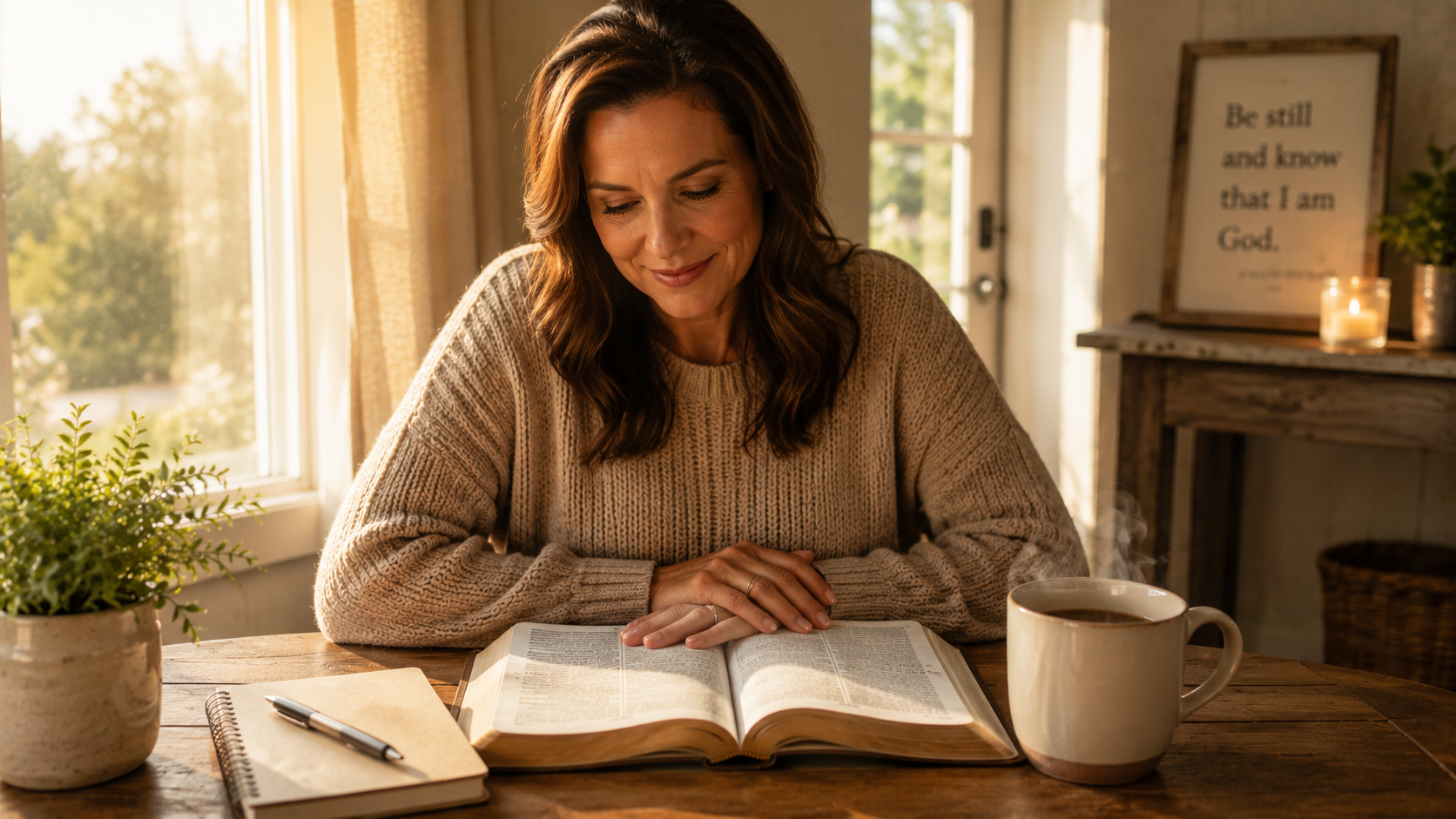
Reading the Bible every day sounds simple enough. Plenty of people have probably recommended it to you, whether from the pulpit, in conversation, or somewhere online. But there is often a gap between hearing that advice and living it out, and most new believers land squarely in that gap, feeling like they are failing at something that should be easy.
You open to Genesis with good intentions. You read for a few days. Then life gets busy, or the reading gets confusing, or you skip a day and feel guilty and somehow never quite get back to it. And now the Bible sits on your nightstand as a reminder of the thing you are supposed to be doing but are not.
Here is what I want you to know before anything else: you are not behind. You are not failing. You are figuring out a new habit, and new habits are hard for everyone. The goal of this post is not to add more guilt. It is to give you a realistic, practical starting point that you can stick with.
Why Daily Bible Reading Matters
Before we talk about how, it is worth understanding why this matters enough to pursue consistently.
Romans 10:17 says it plainly:
"So then faith comes by hearing, and
hearing by the word of God."Romans 10:17 (NKJV)
That means your faith is directly connected to your engagement with Scripture. The more time you spend in the Bible, the more your trust in God is built. Not because reading is a rule to follow, but because God actually uses His word to do something in you when you engage with it.
Hebrews 4:12 describes Scripture as "living and powerful, and sharper than any two-edged sword" (NKJV). That is not poetic language. It is a description of what the Bible does. It is not a static document you read for information. It is God's living word that speaks into your specific circumstances, challenges your thinking, and shapes who you are becoming over time.
This is why consistency matters more than quantity. A little time in the Bible every day does more for your faith than a marathon reading session once a week. The regular, repeated exposure to God's word is what builds something lasting.
Why Starting Small Works
Most new believers make the opposite mistake: they start too big.
They decide they are going to read a chapter a day, or follow a plan that takes them through the entire Bible in a year. That sounds like a good goal. The problem is that a chapter a day sounds manageable until you read chapter 7 in Numbers, which is a very long list of nearly identical offerings from twelve tribal leaders.
A more sustainable starting point is five to ten minutes a day, reading a smaller amount slowly rather than a larger amount quickly.
Five minutes does not sound impressive. It sounds almost too small to matter. But five minutes every day for a year is over thirty hours in Scripture. That is significant. And the person who reads for five minutes consistently will go further than the person who reads for an hour once and then stops.
Give yourself permission to start small. You can always add more later.
What you cannot do is build a habit you have already abandoned.
Where to Start Reading
This is a question nearly every new believer asks, and the answer matters more than most people realize. Where you start in the Bible shapes your early experience with it significantly.
I would recommend starting with the Gospel of John. John was written specifically to help people understand who Jesus is. It is clear, it is accessible, and it answers the most important question first: who is this Jesus, and why does it matter?
From John, a natural next step is the book of Romans, which explains the core of the gospel in detail. Then the Psalms, which give you language for every human emotion and experience you will encounter. From there you can branch out in whatever direction feels right.
What I would not recommend for new believers is starting at Genesis and reading straight through. The Old Testament is rich and important, but without the foundation of the New Testament, a lot of it is difficult to understand in context. Build that foundation first, then come back to the beginning with more tools.
Make It Part of an Existing Routine
The research on habit formation is clear on one thing: new habits stick best when they are attached to existing ones. Trying to create a brand new slot in your day for Bible reading is harder than attaching it to something you already do.
Think about your day. Is there a time when you already sit with coffee in the morning? That is a natural anchor for Bible reading. Do you eat lunch alone? That is another option. Do you have a few minutes before you go to sleep? That works too.
The specific time of day matters less than the consistency. Morning works well for many people because it sets the tone for the day before other things crowd in. But forcing yourself into a 6am quiet time when you are not a morning person means you will dread it and eventually abandon it. Find the time that works for your life, not the time that sounds most spiritual.
What to Do When You Do Not Understand What You Are Reading
This is the part nobody tells you about, and it stops more people than almost anything else. You will read passages that confuse you. You will encounter stories that seem strange or troubling, and hit verses where you do not know what is being said or why it matters.
That is completely normal. The Bible was written over thousands of years across many cultures and contexts. Some of it requires background to understand well.
When you hit something confusing, here are a few practical options.
First, keep reading. Context often explains itself a few more verses or chapters ahead. Second, look for a study Bible, which includes notes that explain historical and cultural background as you read. Third, write down your questions and bring them to someone you trust, a pastor, a small group leader, a more experienced believer. Questions are not a sign of weak faith. They are a sign of honest engagement.
You do not have to understand everything to benefit from reading. You just have to keep showing up.
What to Do When You Miss a Day
You will miss a day. Probably more than one. Life happens, schedules get disrupted, and the streak you were proud of will eventually break.
Here is the most important thing I can tell you about that moment: do not let a missed day become a missed week. The guilt spiral that follows a broken streak is the most common reason people abandon habits entirely. They miss one day, feel bad about it, avoid the Bible because it now carries guilt, and before long weeks have passed. When you miss a day, the only thing to do is start again the next day. Not next week, not once you feel ready. The next day.
Consistency is not a perfect record.
It is a pattern of returning.
I have lived this pattern myself more times than I can count, and here is what I have learned: the returning is the point. God is not keeping a scorecard. He is looking at the posture of your heart, and a heart that keeps coming back is a heart He can work with.
A Starting Point, Not a Finish Line
Reading the Bible is not something you master and then complete. It is a lifelong conversation with the God who made you, and it deepens the longer you stay in it.
Start small. Start where you are. And give yourself the grace to be a beginner, because that is exactly what you are, and beginners who keep showing up eventually become people with deep roots. The Bible is not going anywhere. It will be there tomorrow, and the day after that, and every day you decide to open it again. There is no deadline and no finish line. There is only the next time you sit down and read.
Learning to open your Bible consistently, even on the days when it feels hard, is at the heart of what it means to grow in faith. I wrote The Way Through for the season when following Jesus feels more complicated than anyone prepared you for, and my free guide When the Bible Doesn't Make Sense is there for the passages that leave you stuck. No theology degree required.