
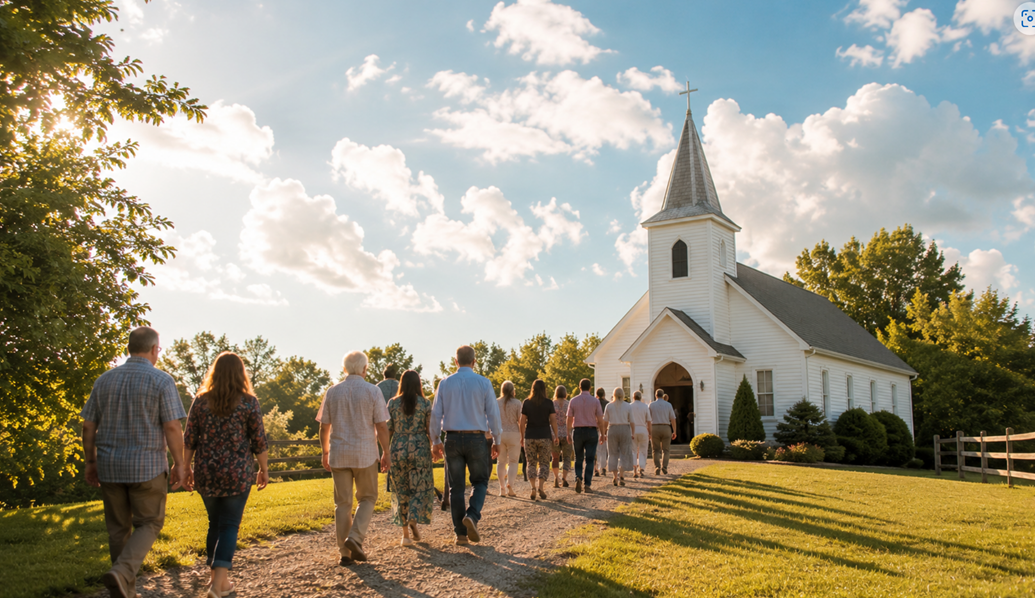
Finding a church is one of those things that sounds simple until you actually try to do it.
You show up somewhere and it feels too big, or too small, or too formal, or too casual, or the music is not what you expected, or you felt invisible the whole time, or everyone seemed to already know each other and there was no obvious way in.
Or maybe you have not started looking yet because you are not even sure where to begin, or because a previous church experience left you hurt and cautious, or because you genuinely do not know what you are looking for.
This post is a practical guide for exactly that situation.
Why Church Matters
Before we get to the how, it is worth being honest about the why, because a lot of new believers treat church as optional. Something they will get to eventually, or something they will do once they feel more ready, or something they will try if they can find the right fit.
But the New Testament does not treat church as optional.
"And let us consider one another in order to stir up love
and good works, not forsaking the assembling of
ourselves together, as is the manner of some, but
exhorting one another, and so much the more
as you see the Day approaching."Hebrews 10:24-25 (NKJV)
The Christian life was designed to be lived in community. You need other believers to pray with you, challenge you, encourage you, and walk with you through the hard things. You need to be known by people who share your faith and can speak into your life. And honestly, other believers need you too. You have something to contribute to a community even as a new Christian.
Church is not perfect. Every church has problems because every church is made up of people, and people are complicated. But an imperfect church is still where God has placed the community of His people, and that community is essential to a healthy faith.
What to Look For
When you are looking for a church, there are a few things that matter more than the style of the music or the size of the building.
The most important thing is whether the Bible is taught faithfully. Does the pastor preach from Scripture, explaining what it actually says in its original context and how it applies to life? Or does the Scripture get used as a jumping-off point for ideas that are not really grounded in the text? A church that takes the Bible seriously will feed your faith in a way that no amount of good music or comfortable seats can substitute for.
The second thing is whether the gospel is central. Is Jesus the point? Is salvation by grace through faith in Christ the clear message? Or is the emphasis primarily on self-improvement, social causes, or other things, however good, that have displaced the core message?
The third thing is whether genuine community exists. Can you find a place where people actually know each other, where there is real pastoral care, where small groups or some form of smaller community is available? A church where you can attend anonymously every week without anyone knowing your name is not offering you what you actually need.
Beyond those three things, style and size and format are matters of preference, and different people genuinely thrive in different environments. Some people connect better in a smaller church where they are known quickly. Others do well in a larger church with more resources and programming. There is no single right answer.
How to Actually Find One
Start by asking other Christians you trust if they have a church they love and why. Personal recommendations from people who know you are often the most useful starting point.
If you do not have that network yet, a few reliable starting points are church finders from organizations like The Gospel Coalition, 9Marks, or the Southern Baptist Convention, all of which maintain directories of churches that have been vetted for sound doctrine. You can search by zip code and find options in your area.
Once you have a few options, visit them. Plan to visit any church at least two or three times before drawing conclusions. First impressions are often misleading in both directions. A church that felt overwhelming the first Sunday might feel completely different once you know where things are. A church that felt warm the first week might feel less so on subsequent visits.
When you visit, pay attention to whether you feel welcome without feeling pressured. Notice whether the teaching is clear and grounded in Scripture. See if there is an obvious next step for getting connected, a class for new members, a small group sign-up, something that invites you deeper in.
Questions to Ask When You Visit
A visit tells you more than a website ever will, and a few honest questions can help you see clearly. You do not need to interrogate anyone. Just keep these in mind as you experience a service or two.
Is the Bible actually opened and taught? Not just quoted in passing, but explained and applied. A church can be warm, polished, and well-attended and still leave Scripture closed.
The teaching of God's word is the meal. Everything else is the table setting.
Is Jesus central, or an accessory? Listen for whether the songs, the sermon, and the culture point to Christ and the gospel, or mostly to self-improvement with a verse attached.
How do people treat newcomers who have nothing to offer? Watch how the church welcomes the person who cannot volunteer, give, or impress. That tells you what the community actually believes about grace.
Is there any pathway for you to grow? Ask whether the church has some way for a new believer to learn the basics, whether a class, a small group, or a person willing to meet with you. A church that has no on-ramp for beginners may love you and still leave you stuck.
And could you imagine calling these people when life falls apart? Church is not primarily an event you attend. It is a people you belong to. Somewhere in the room should be the beginnings of that.
A Few Cautions Worth Knowing
Most churches are imperfect in ordinary, forgivable ways. But a few patterns are worth walking away from, even as a new believer.
Be cautious where questions are unwelcome. Healthy churches can handle honest questions without treating them as rebellion. A church that punishes curiosity will struggle to disciple you.
Be cautious where leaders are beyond accountability. Godly leaders have people who can tell them no. Where one personality controls everything and correction is impossible, trouble is usually not far behind.
Be cautious where money is the constant theme, or where God's blessing is treated as a product you purchase with enough faith. The gospel is free. Anyone selling it is selling something else.
And be cautious where perfection is performed and struggle is hidden. You are looking for a hospital for sinners, not a showroom for finished products. If nobody ever admits weakness, grace has left the building.
Noticing these things is not being judgmental. It is being a good steward of your own soul, which God has asked you to be. If you see them, you are free to keep looking. God is not offended by discernment.
What to Do Once You Find One
Finding a church is the beginning, not the end. The goal is to become genuinely planted there, known, connected, and contributing.
Most churches have some version of a membership or newcomer class. Take it. It is usually a low-pressure introduction to the church's beliefs and structure, and it is the most natural way to begin building relationships with leaders and other members.
Get into a small group. This is where real community actually happens. The Sunday morning service is important, but it cannot substitute for the smaller, more personal environment where you are known and where you can know others.
Look for one place to serve. Even something small. Serving alongside other people is one of the fastest ways to build genuine connection, and it gives you a reason to keep showing up consistently.
Give the church time. Meaningful community takes months to build, not weeks. The people who find their place in a church are almost always the ones who committed to showing up consistently long enough for roots to form.
You Belong Somewhere
If you have been a Christian for any length of time without being part of a church community, I want to encourage you to take that next step. Not because church is a rule you have to follow, but because you were designed to need it, and it will change your faith in ways that going it alone simply cannot.
Finding your people is one of the most important steps a new believer takes, and it is rarely a straight line. I wrote The Way Through for the stretches of faith that feel more complicated than anyone warned you about, and if you are still finding your footing, my free guide Ten Questions New Believers Are Afraid to Ask is a good place to keep the conversation going.